
The Shape of the Problem
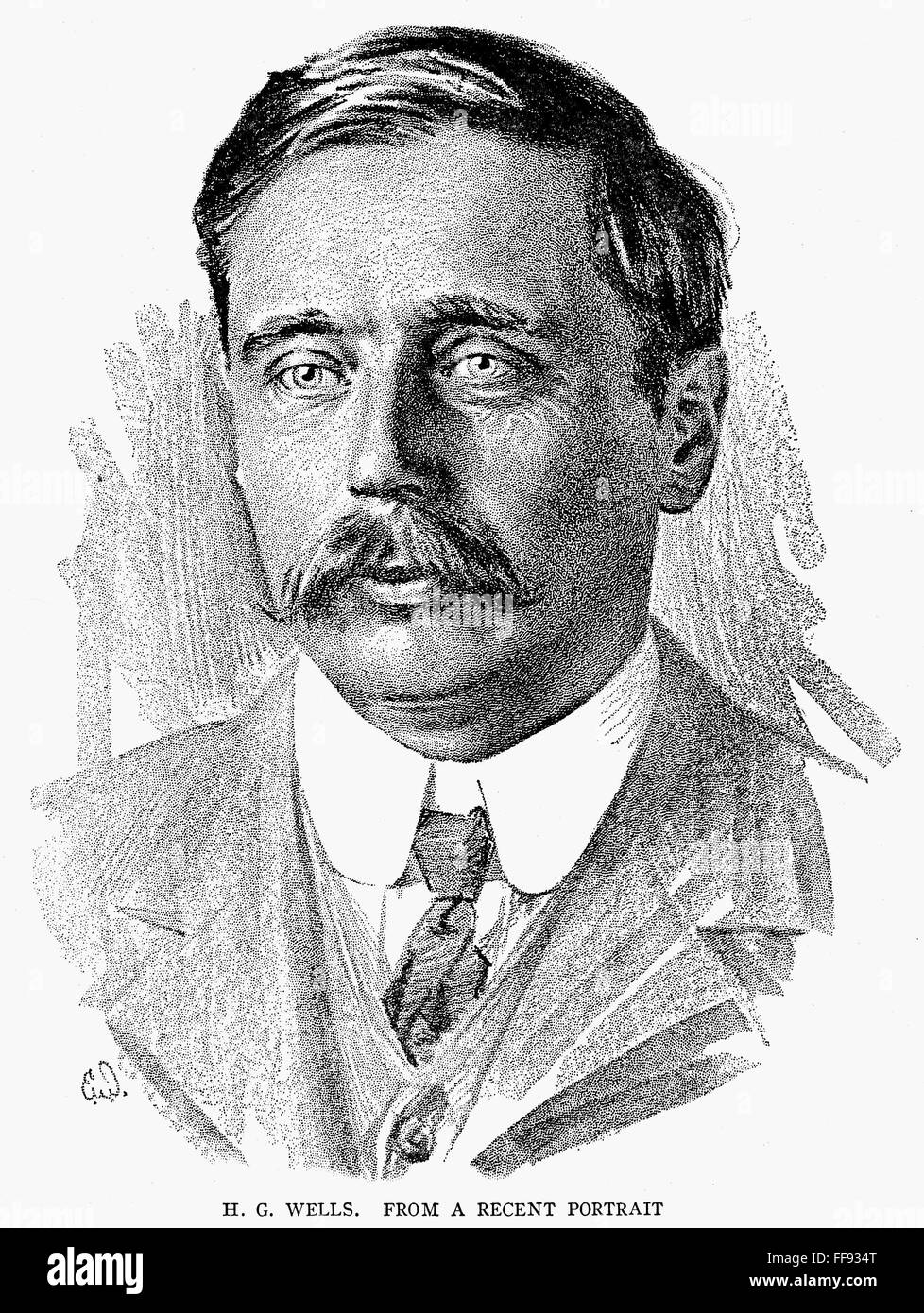
H. G. Wells is the most useful thinker the literary apologetic has, not because he was right about anything in particular, but because he was wrong about everything in a way that clarifies what is actually true. He spent fifty years trying to build a secular version of Christian hope — progress, reason, organization, the World State — and his fiction kept showing him why it could not be done.
The Invisible Man turns invisible and becomes a murderer. The Time Traveller goes forward and finds the Eloi and the Morlocks — the leisure class and the working class, separated by four hundred thousand years of drift into something inhuman. The Island of Doctor Moreau produces not a higher order of being but a community of tortured animals who have been forced into the shape of men and who revert the moment the force is removed.
Each of these novels is Wells arguing against himself. He believed in the rational perfectibility of human nature. His imagination kept producing evidence to the contrary. The Wells Continuum is the project of taking that evidence seriously — tracking the literature and film that refutes, extends, or dialogues with Wells’s major positions, and asking what it means that so much of the most morally serious fiction of the last century has been written in argument with him.
What the Continuum Tracks
The Wells Continuum database — available on this site as Wells + _____ — maps more than sixty works of literature and film against three of Wells’s central convictions: that human nature is improvable by rational means, that scientific knowledge is the highest form of human knowing, and that death is a problem to be solved rather than a reality to be received.
The works in the database are not uniformly anti-Wellsian. Some complement his vision. Some extend it. Some refute it directly. What they share is that they could not have been written without Wells — that he defined the terms of a debate that the twentieth century could not stop having, and that the twenty-first century is still having.
The literary apologetic argument is not that Wells was a villain. He was a man of genuine moral seriousness who happened to be wrong at the level of first principles. The darkness in his fiction is not his personal failing; it is the darkness that is always there when you build a system of hope on the assumption that human beings are basically fine and just need better management.
The Responses
Chesterton saw it first. His Heretics (1905) and Orthodoxy (1908) were written partly as a direct response to Wells, arguing that the progressive vision was not a liberation from dogma but a substitution of worse dogmas for better ones. Where Wells believed that reason could construct a sufficient account of human nature, Chesterton insisted that reason alone has no account of why human nature should be trusted to manage reason.
C. S. Lewis came later and hit harder. His Space Trilogy — particularly That Hideous Strength (1945) — is an extended imaginative argument against exactly the Wellsian project: the application of scientific management to human beings, the assumption that the best minds should organize the rest, the belief that death and irrationality are merely problems awaiting technical solutions.
Huxley, Orwell, Atwood, Le Guin, Dick — the great dystopian tradition of the twentieth century is, in large part, the literary tradition that Wells set in motion and that then turned against him. Each of these writers took his premises seriously enough to follow them to their conclusions, and the conclusions were not utopias.
Genesis 3:15 and the Shape of Every Story
The primal promise of Genesis 3:15 — that there will be enmity between the seed of the woman and the seed of the serpent, that the heel will be bruised and the head crushed — is the shape that every serious story follows, whether its author knows it or not. There is a wound. There is resistance. There is a cost. There is, sometimes, a victory that looks like defeat.
Wells could not write his way out of this shape. Neither could the writers who came after him. The Continuum is the record of their attempts, and of what those attempts reveal about the nature of the problem they were all trying to solve.
The database is a beginning, not a conclusion. Readers who know of works that belong in it are invited to submit them. The argument is ongoing. It always has been.
Stay with the Argument
New essays, archive entries, and database additions are published as the work develops. Leave your email to receive updates — nothing else, and never more than the work warrants.
You’re on the list. The work continues.