The Master Narrative
Genesis 3: Rupture, Revolution, and the Fracturist Reading
Every account of human failure, and every account of its possible resolution, presupposes a particular understanding of how fundamental change occurs. Broadly speaking, two explanatory models recur throughout theology, philosophy, and literature: revolution and rupture. These are not merely different degrees of transformation. They represent distinct kinds of event, and therefore imply distinct kinds of remedy.
The Revolutionary Reading
According to the first model, Genesis 3 narrates a decisive act. The serpent presents an alternative. Eve deliberates and accepts it. Adam, though present, remains silent and follows her example. The transgression itself constitutes the pivotal event, and all subsequent consequences proceed from it.
Within this framework, the relationship between humanity and God remains intact until the moment of disobedience. The act damages what previously existed. Separation is therefore understood as the consequence of a prior decision. The act is primary; estrangement is derivative.
This interpretation carries a significant implication. If the human condition originates in a wrongful act, then a different act might produce a different outcome. If the damage arose through choice, it may be reversed through better choices. Moral improvement, ethical progress, and projects of human self-cultivation all depend, in one form or another, upon this assumption. Humanity's problem is fundamentally behavioral, and behavioral reform offers the path toward restoration.
The Rupture Reading
A second interpretation reverses the order of explanation. Here Genesis 3 does not depict an act that causes separation; rather, it portrays separation already occurring and renders that event visible through narrative form.
The serpent's intervention is not merely an inducement to consume forbidden fruit. More fundamentally, it introduces an alternative account of God. The conversation marks the moment at which humanity's relationship with God ceases to function as the unquestioned horizon within which judgment occurs, and becomes instead one proposition among others, subject to independent evaluation.
From this perspective, the act of eating does not produce the rupture. It manifests it. The transgression is not the cause of estrangement but its expression. Once the relationship is displaced from its constitutive position and subjected to external adjudication, the rupture has already taken place.
The separation, therefore, cannot be understood as an unfortunate consequence that might have been avoided while everything else remained unchanged. It is embedded within the structure of the act itself. To step outside a relationship in order to assess it by alternative criteria is not an event that happens to the relationship; it is the termination of that relationship as the governing frame of judgment.
A Fracturist Position
This site reads Genesis 3 through rupture rather than revolution — not chronologically, since the conversation and the eating belong to the same narrative sequence, but explanatorily. Rupture comes first in the order of interpretation.
If this is correct, then any revolutionary project that seeks to resolve the human condition by stepping outside an inherited framework and evaluating it according to alternative standards does not remedy the original separation. It repeats it. The form of the act remains unchanged even when its language, ideology, or objectives differ.
It is in this sense that this site employs the term Fracturist. The term itself possesses a literary history. In the early twenty-first century, a movement known as Fracturism presented itself as insurgent and anti-establishment, positioning its work against prevailing postmodern assumptions. Yet critics frequently observed that despite its rhetoric of rupture and rebellion, the movement remained structurally dependent upon the very intellectual framework it claimed to reject. The rebellion was genuine; the underlying grammar endured.
The term is used here analogously. A Fracturist is one who assumes that the human condition consists fundamentally of a fracture: damage sustained by something that remains essentially what it always was, awaiting repair through sufficient human effort, insight, or reform.
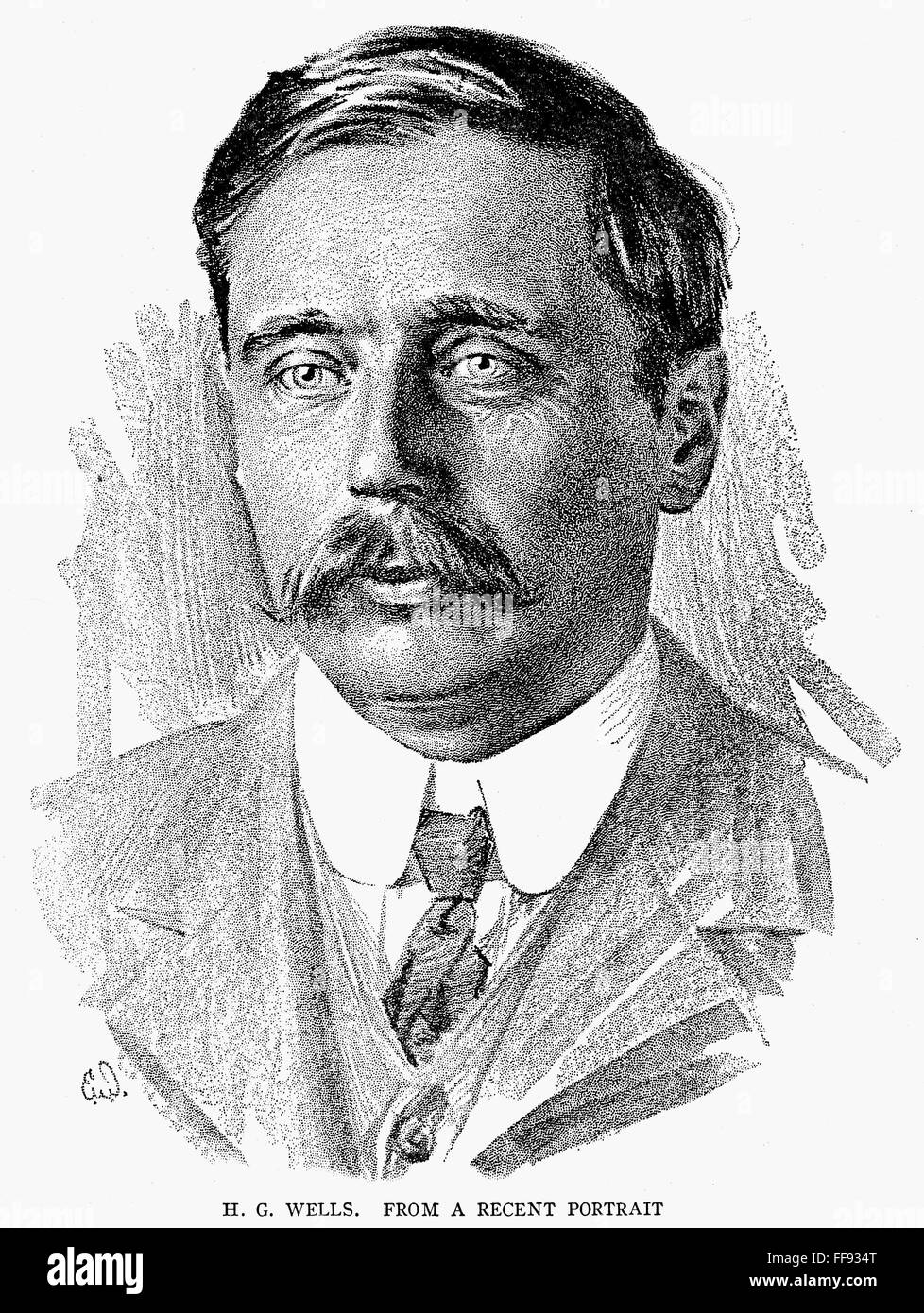
This assumption appears, for example, in the fiction of H. G. Wells. Wells frequently contests the Christian moral framework inherited from his culture. In The Invisible Man, Griffin's invisibility functions as a literary enactment of revolutionary transcendence. He steps outside the established frame in order to discover what lies beneath it.
What emerges, however, is not a liberated humanity flourishing beyond arbitrary constraint. What emerges is appetite. The violence that follows remains condemnable according to the very moral standards the revolutionary gesture was meant to supersede. The experiment does not overcome the separation. It reenacts it. The revolution repeats the original movement and arrives at the same destination.
The Foundation of the Argument
On this reading, humanity's relationship with God was not damaged by an act that could subsequently be repaired through a better act. It was severed through an act that was itself the severing. Consequently, every attempt to resolve the human condition by stepping outside that relationship and judging reality according to alternative standards reproduces the original pattern, regardless of how radical its rhetoric may appear.
Genesis 3:15 therefore does not promise a more successful revolution. It promises an intervention that originates beyond the relation as it presently stands — an arrival that does not repeat the pattern of rupture but brings it to an end.
The term rupture is not introduced here as a novelty. Dietrich Bonhoeffer, in his 1933 Berlin lectures on the opening chapters of Genesis, reads the fall as the event in which humanity's relation to God ceases to be the ground from which all other knowledge proceeds and becomes instead an object available for independent judgment — a description of the severing this site calls rupture, though Bonhoeffer does not use the word itself.1 The theological tradition has described the same event in related terms: as a severing of relation, as the introduction of enmity (’eybah, Gen. 3:15) where there had been none, as estrangement, as separation. What these terms share, and what distinguishes them from the language of fracture or damage, is that they describe the failure of a relation — not an injury sustained by a thing that remains, in itself, intact.
The Promise
Genesis 3:15 is the hinge on which all of Scripture turns. God speaks to the serpent: "I will put enmity between you and the woman, and between your offspring and her offspring; he shall bruise your head, and you shall bruise his heel." Gen. 3:15 ESV
Theologians call this the protevangelium — the first gospel. It is a promise embedded in a curse, a word of hope spoken in the moment of judgment. The enmity is real — the heel will be bruised. But the head will be crushed. Something is coming that will undo what was done here, and it will not come from human initiative. It will come from the seed of the woman.
The promise is not yet a story. It is a shape waiting to be filled. What the rest of Scripture does, across thirty-nine books and more than a thousand years of recorded history, is fill that shape — trace the line from this moment of rupture to the moment of its resolution, through all the complications and failures and false starts that human history provides along the way.
The Thread Through Scripture
The thread is not always visible. That is part of the point. Scripture does not move in a straight line from promise to fulfillment. It moves through the lives of people who misunderstand the promise, who act against it, who abandon it and return to it and abandon it again. The patriarchs, the judges, the kings — none of them are the seed the promise describes. All of them, in their failures and their glimpses of faithfulness, are pointing toward something they cannot themselves be.
The pattern repeats with increasing clarity. Joseph, sold into slavery by his brothers and raised to save the people who betrayed him. Gen. 37–50 Moses, who leads the people out of bondage but cannot himself enter the promised land. Deut. 34 David, the man after God's own heart, whose kingdom ruptures under the weight of his own sin. 2 Sam. 11–12 Each of these figures carries the shape of the promise without being its fulfillment — each one a type, an anticipation, a partial image of the one who is coming.
The prophets make the anticipation explicit. Isaiah 53 describes a suffering servant who bears the iniquity of others, who is wounded for transgressions not his own, whose bruising accomplishes what no human effort can: the healing of the separation opened in Genesis 3. Isa. 53:5 The language echoes the original rupture precisely. The heel will be bruised. The bruising will heal. The pattern completes.
The Cross
The crucifixion is the event toward which Genesis 3:15 has been pointing since the moment it was spoken. This is not typological ingenuity or retrospective interpretation. It is the structure of the story. The seed of the woman, born of a virgin, enters the domain of the serpent. The heel is bruised — He suffers, He dies, and the cost is total. And the head is crushed. Death, which entered through the rupture in Genesis 3, is defeated from the inside. The one who had the power of death has that power taken from him, not by force from without but by the willingness of the Son of God to receive the full weight of the separation and carry it to a place where it can no longer produce death.
Paul traces the line explicitly: "For as in Adam all die, so also in Christ shall all be made alive." 1 Cor. 15:22 ESV The rupture in Genesis 3 is not merely individual. It is representative. Adam acts for all. And the second Adam — the seed of the woman who comes to undo what the first Adam did — also acts for all. The scope of the damage and the scope of the repair are the same.
Every Story Since
This is the master narrative. Every serious story ever written is in conversation with it, whether the author knows it or not. The severing is there — the sense that something has gone irreparably wrong, that the world is not what it should be, that the gap between the ideal and the actual is not merely inconvenient but tragic. The longing is there — the desire for restoration, for the return of something lost, for a world that works the way the heart insists it should. And the question is always the same: where does the repair come from?
The answers differ. Wells said it comes from science and rational organization. Marx said it comes from the correct arrangement of economic forces. Freud said it comes from the correct understanding of the unconscious. Every utopian project of the last two centuries has been, at its root, a Fracturist attempt to repair the rupture of Genesis 3 without the seed of the woman — to reach the resolution of the story by human means, without the cross.
The literary apologetic exists to read that attempt honestly. Not with contempt for those who make it — Wells was a serious man, and so were Marx and Freud — but with the clarity that comes from knowing the shape of the story they were trying to tell. They were writing variations on the master narrative. They could not escape its structure. Their fictions kept betraying them, producing evidence of the rupture they were trying to explain away, arriving at darkness when they had promised light.
The cross is the only resolution the story can bear. Everything else is a subplot.
- Dietrich Bonhoeffer, Creation and Fall: A Theological Exposition of Genesis 1–3, vol. 3 of Dietrich Bonhoeffer Works, trans. Douglas Stephen Bax, ed. John W. de Gruchy (Minneapolis: Fortress Press, 2004).