
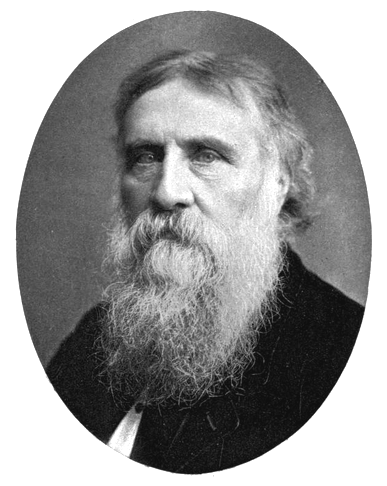
Formation and Loss
George MacDonald (1824–1905) was born in Huntly, Aberdeenshire, the son of a Congregationalist farmer, and formed early by two realities that never left him: the Scottish landscape with its hills and rivers, and the death of his mother before he was old enough to fully know her. These two things — the beauty of the world and the wound at its center — became the twin poles of everything he wrote.
He was trained for the ministry, ordained in 1850, and promptly ran into trouble. His congregation at Arundel found his theology too generous — too insistent on the love of God as something wider and more persistent than Calvinist orthodoxy allowed — and his salary was cut until he resigned. He never held a pulpit again. He spent the rest of his life writing, and the theology that cost him his ministry became the animating conviction of his fiction.
That conviction was simple and radical: God is love, and love does not finally lose what it loves. MacDonald was not a systematic theologian, and his universalist tendencies remain a point of legitimate debate. But the center of his work is not universalism — it is the character of God as Father, and the corresponding dignity of every human creature made in that Father's image.
The Sanctified Imagination
MacDonald's most durable contribution to literary theology is not a doctrine but a method. In his essay The Imagination: Its Functions and Its Culture (1867), he argued that the imagination is not decoration or escape — it is the faculty by which human beings participate in the creative activity of God. The poet does not invent; the poet discovers. The world was made by a speaking God, and it remains saturated with meaning that the imagination, rightly used, can perceive directly.
This is why his fairy tales matter beyond their literary merit. Phantastes (1858) and Lilith (1895) are not allegories in the conventional sense. They do not carry a predetermined meaning that the narrative delivers to the reader. They generate meaning as they go, in the way that dream and symbol always do — not by pointing to something outside themselves but by being, themselves, the kind of thing that cannot be said in any other way.
"I write, not for children, but for the child-like, whether they be of five, or fifty, or seventy-five." — George MacDonald
C.S. Lewis called the experience of reading Phantastes at sixteen the moment his imagination was "baptized." He did not yet have the theological vocabulary for what he was experiencing. MacDonald gave him the experience first. That sequence — imagination before argument — is the distinctive contribution of MacDonald's method to the tradition this site inherits.
The Grammar of Holiness
What MacDonald perceived in story — and what Lewis later named — is a quality he called holiness. It is not piety. It is not moralizing. It is a quality of light, or weight, or depth that certain moments in fiction carry and that cannot be produced by craft alone. MacDonald believed it was real, that it corresponded to something actual in the nature of the universe, and that the imagination could receive it the way the eye receives light.
His novels — Robert Falconer (1868), Wilfrid Cumbermede (1872), Thomas Wingfold, Curate (1876) — are uneven by any conventional standard. The plots are loose. The prose is often sentimental. But the characters who encounter God in these books encounter something that feels theologically serious: not a doctrine about God but the presence of God, mediated through human relationships and ordinary circumstances, arriving without announcement and changing everything.
That is MacDonald's theological argument in fictional form. Grace is not extraordinary. It is the deepest structure of the ordinary, available to anyone willing to receive it.
The Legacy
The line from MacDonald runs directly through Chesterton, Lewis, and Tolkien — three writers who acknowledged his influence explicitly and whose work cannot be fully understood without him. Lewis edited an anthology of MacDonald's writings in 1946 and wrote in the preface that he had never written a book in which he did not quote MacDonald. Tolkien's account of myth as a vehicle for theological truth owes more to MacDonald than to any other single source.
For the literary apologetic, MacDonald is the figure who makes the whole project possible. He demonstrated, before anyone had the vocabulary to argue for it, that the Christian imagination can produce work of genuine literary power — work that does not reduce to sermon, that carries its meaning in the way that only story can carry it, and that arrives in the reader before the argument does.
Principal Works
- Phantastes — 1858
- David Elginbrod — 1863
- Alec Forbes of Howglen — 1865
- Robert Falconer — 1868
- The Princess and the Goblin — 1872
- Thomas Wingfold, Curate — 1876
- The Princess and Curdie — 1883
- Lilith — 1895
- The Imagination: Its Functions and Its Culture — 1867 (essay)
Stay with the Argument
New essays and archive entries are published as the work develops. Leave your email to receive updates — nothing else, and never more than the work warrants.
You’re on the list. The work continues.