
The Long Conversion
Clive Staples Lewis (1898–1963) was an atheist for the first thirty-one years of his life, and an unusually well-read and philosophically careful one. His conversion to Christianity in 1931 was not sudden but incremental — a long series of intellectual concessions made against his will, until he arrived at theism and then, two years later, at Christianity. He described himself, famously, as the most reluctant convert in England.
That reluctance matters for reading him. Lewis knew the atheist arguments from the inside. He had believed them. When he dismantled them, he was not caricaturing a position he had never seriously held — he was describing the ground he had actually walked, and the reasons it had given way. This gives his apologetic writing an unusual authority. He was not arguing against an opponent; he was arguing against his former self.
The intellectual biography is inseparable from the literary one. Lewis read voraciously and was formed by what he read. George MacDonald baptized his imagination at sixteen. G.K. Chesterton made him feel, for the first time, that a thoroughly modern and clear-headed man could take Christianity seriously. J.R.R. Tolkien argued with him, over a long walk in 1931, that myth was not a lie but the medium by which certain truths could only be told. Three months later Lewis was a Christian.
The Argument from Joy
Lewis's most original theological contribution is the argument from Sehnsucht — the German word for longing that he adopted because no English word was precise enough. The argument runs through The Pilgrim's Regress (1933), Surprised by Joy (1955), and most directly in the sermon "The Weight of Glory" (1941): that the inconsolable longing produced by great art, by certain landscapes, by music and memory, is not a feeling about something but a feeling of something — a perception of a real object that nothing in the created order can supply.
The desire points to its object. The fact that nothing in ordinary experience satisfies it is not evidence that the object does not exist; it is evidence that the object is not in ordinary experience. This is not proof of God. Lewis was careful never to present it as proof. It is evidence — the kind of evidence that, combined with other evidence, makes the Christian account of reality more plausible than its rivals.
"If I find in myself a desire which no experience in this world can satisfy, the most probable explanation is that I was made for another world." — C.S. Lewis, Mere Christianity, 1952
Lewis and Wells
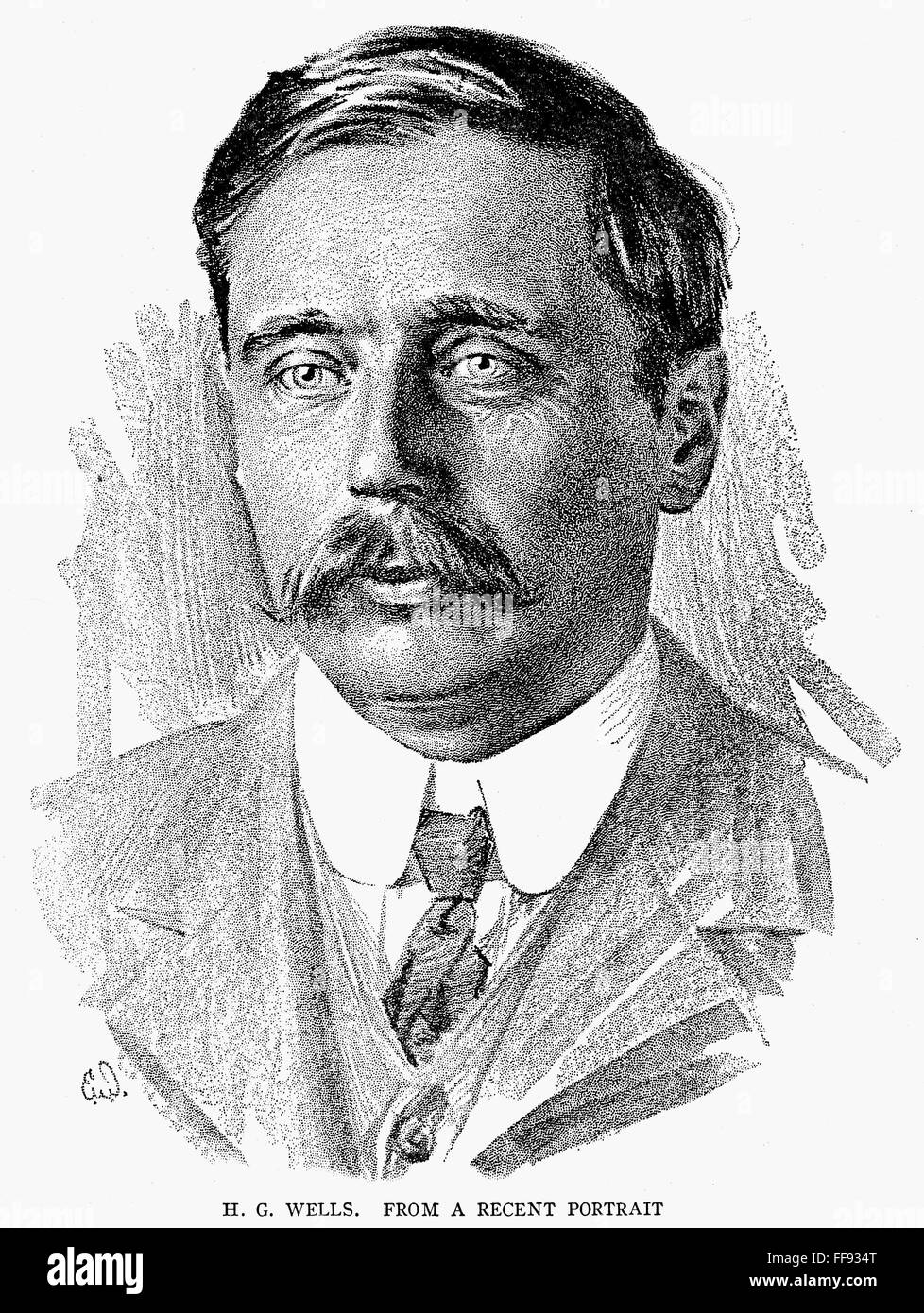
Lewis read Wells early and carefully, and his response was not dismissal but argument. The Space Trilogy — Out of the Silent Planet (1938), Perelandra (1943), That Hideous Strength (1945) — is a sustained imaginative counter-argument to the Wellsian vision. Where Wells imagined a universe without moral structure, open to human ambition and rational reorganization, Lewis imagined a universe saturated with spiritual reality and governed by intelligences far older and wiser than humanity.
That Hideous Strength is the most direct response. The N.I.C.E. — the National Institute of Co-ordinated Experiments — is Wells's World State given fictional form: rational, efficient, committed to the improvement of the human condition, and in practice working toward the destruction of everything that makes human beings human. Lewis was not arguing that science is bad. He was arguing that the Wellsian project — scientific management of human beings stripped of any acknowledgment of human dignity or divine authority — is necessarily destructive, because it begins by denying the very things it claims to serve.
The Method
What the literary apologetic takes from Lewis is primarily a method: the willingness to hold rigorous argument and serious imagination together without sacrificing either. Lewis was a professional literary scholar who wrote science fiction and children's fantasy. He was a popular apologist who also produced serious academic work on medieval cosmology and Renaissance allegory. He refused the divisions that his culture assumed were necessary, and the refusal was not eccentric but principled — grounded in his conviction that the same God who is the source of all truth is also the source of all beauty, and that argument and story are two ways of approaching the same reality.
That conviction is the foundation of this site. The archive, the essays, the Wells Continuum — all of it is an attempt to practice the kind of reading Lewis demonstrated: taking texts seriously as texts, taking their theology seriously as theology, and asking what the conjunction of the two reveals about the nature of the world we actually live in.
Principal Works
- The Pilgrim's Regress — 1933
- The Allegory of Love — 1936 (scholarship)
- Out of the Silent Planet — 1938
- The Problem of Pain — 1940
- The Screwtape Letters — 1942
- Perelandra — 1943
- That Hideous Strength — 1945
- Mere Christianity — 1952
- The Lion, the Witch and the Wardrobe — 1950
- Surprised by Joy — 1955
- Till We Have Faces — 1956
- An Experiment in Criticism — 1961
Stay with the Argument
New essays and archive entries are published as the work develops. Leave your email to receive updates — nothing else, and never more than the work warrants.
You’re on the list. The work continues.