
The Shrinking Man
Richard Matheson (1926–2013) is not generally read as a theological writer. He is read as a writer of horror, science fiction, and the uncanny — a craftsman of dread and the displaced ordinary whose work formed the imagination of a generation of American genre writers and filmmakers. Stephen King acknowledged him as a primary influence. Steven Spielberg directed the film adaptation of his novel Duel (1971). His story "Nightmare at 20,000 Feet" became one of the most famous episodes of The Twilight Zone.
But The Shrinking Man (1956) — published the same year as the film adaptation The Incredible Shrinking Man — is something else. It is a novel about what remains of a human being when everything external is stripped away. Scott Carey is exposed to a radioactive cloud and begins, inexorably, to shrink. The novel follows him from his normal life through his progressive reduction — to the size of a child, a mouse, a spider's prey — until he is so small that the subatomic world opens up around him like a new universe.
What Matheson finds there is not extinction. It is wonder.
To God There Is No Zero
The novel's final pages are among the most theologically charged in postwar American fiction, though they arrive in the vocabulary of awe rather than doctrine. Carey, now smaller than any measurable thing, faces what should be the end — the final diminishment into nothing. Instead he finds that there is no nothing. The smaller he becomes, the larger the universe that opens around him. He is not approaching zero; he is approaching infinity from the other direction.
Matheson gives Carey a realization that carries the full weight of the novel's argument: that he still exists, that existence cannot be extinguished by mere reduction in scale, and that a universe in which he still matters at subatomic size is a universe with a different structure than the materialist one that predicted his disappearance. The image of God persists below the threshold of measurement. Worth is not a function of size.
"To God there is no zero. I still exist." — Richard Matheson, The Shrinking Man, 1956
Matheson and Wells
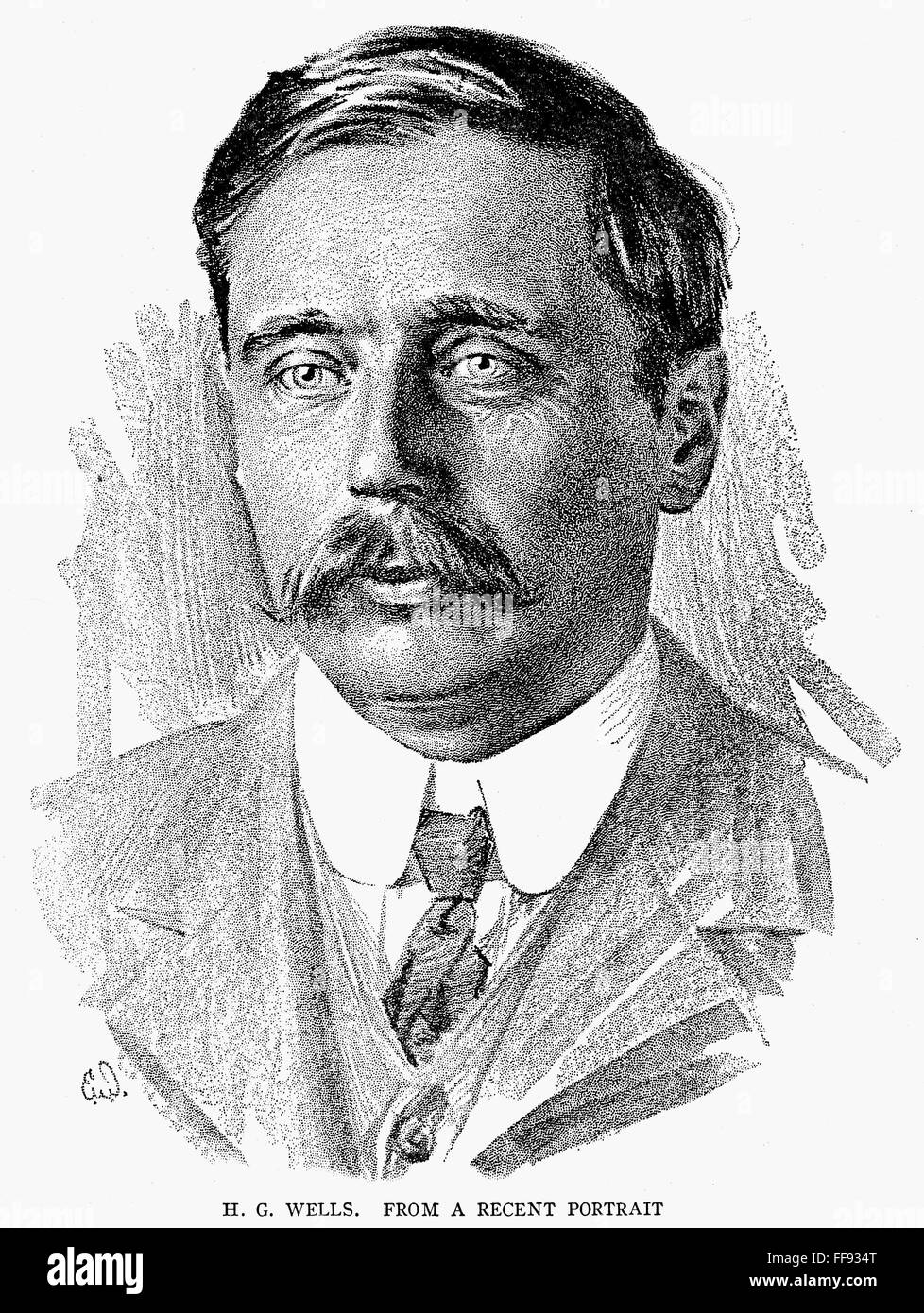
The contrast with Wells is structural, not incidental. Wells made a man invisible and watched him become a monster: The Invisible Man (1897) is the story of a man freed from social accountability who discovers that what was beneath the surface was worse than anyone suspected. Griffin's invisibility reveals appetite, cruelty, and the will to power. Wells's argument is that the human animal, unrestrained, is not capable of wonder — it is capable only of domination.
Matheson's answer is direct. Scott Carey, stripped of everything that Wells would have said constituted his humanity — his body, his social role, his physical power, his very visibility — does not become a monster. He becomes more fully himself. The reduction that Wells used to reveal the worst in Griffin reveals, in Carey, the capacity for awe that no material process can extinguish. The two novels ask the same question and arrive at incompatible answers because their authors began from incompatible assumptions about what a human being is at the root.
The Persistence of Wonder
Matheson was not a confessional Christian writer. His theological interests were broader and less doctrinally specific, running toward spiritualism, the persistence of consciousness after death, and the possibility of transcendence within the ordinary. His novel What Dreams May Come (1978) explores the afterlife with genuine seriousness, drawing on sources ranging from Swedenborg to Eastern thought. His short story "A Stir of Echoes" (1958) treats psychic experience as a natural extension of human perception rather than a supernatural intrusion.
What connects all of this to the literary apologetic is not a specific doctrine but a persistent conviction: that the material account of human existence is insufficient, that there is more to a human being than chemistry and social conditioning can explain, and that the experience of wonder — the sense that existence is larger and stranger and more valuable than any reductive theory can accommodate — is evidence of something real rather than a consoling fiction.
That conviction places Matheson in a specific tradition — the tradition of writers who, whether they knew it or not, were arguing against Wells. He is the most unexpected member of that tradition, and perhaps the most affecting, because his argument arrives not in the form of theological reflection but in the form of a man shrinking into infinity and finding, at the bottom of everything, that he still exists.
Principal Works
- Born of Man and Woman — 1954 (short stories)
- The Shrinking Man — 1956
- I Am Legend — 1954
- A Stir of Echoes — 1958
- Hell House — 1971
- Bid Time Return — 1975 (filmed as Somewhere in Time)
- What Dreams May Come — 1978
- Collected Stories — 1989
Stay with the Argument
New essays and archive entries are published as the work develops. Leave your email to receive updates — nothing else, and never more than the work warrants.
You’re on the list. The work continues.